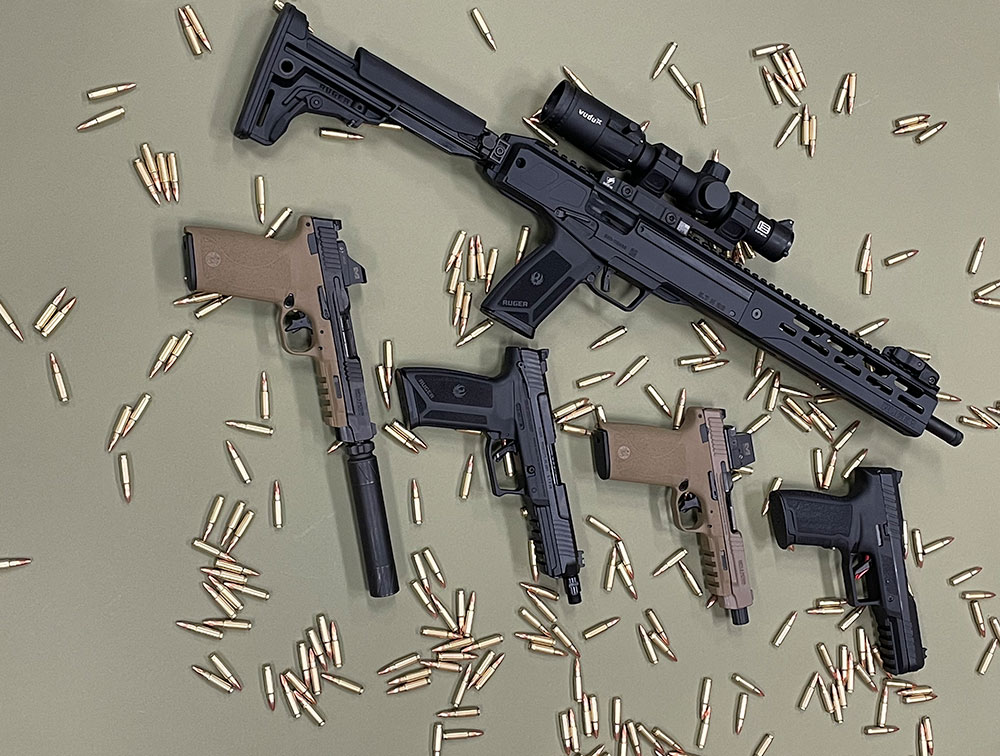
Firearms accessories have evolved considerably over the past decade, and few product categories reflect that progress more clearly than chassis-based conversion systems for handguns. A universal handgun conversion kit allows shooters to reconfigure a standard pistol into a more structured, brace-equipped platform without permanently altering the firearm itself. For those exploring this option for the first time, having a clear understanding of the mechanics, legal considerations, and practical expectations leads to far better outcomes.
Why Are Conversion Kits Gaining Popularity Among Shooters?
The appeal of conversion kits lies in their ability to expand the capability of a firearm the shooter already owns and trusts. Rather than purchasing a separate long-gun platform, a conversion kit allows users to leverage a familiar trigger, sight system, and manual of arms — all while gaining the ergonomic and accuracy benefits of a shoulder-fired configuration.
Home defense shooters, range enthusiasts, and competitive shooters have each found value in this type of system for different reasons. The ability to add an optic, stabilize the platform, and engage targets more precisely at extended distances are advantages that translate across disciplines and use cases.
What Should Buyers Understand About Legal Requirements?
Legal considerations are an essential part of the purchasing conversation. Conversion kits that incorporate a true stock rather than a pistol brace may be subject to additional regulations depending on jurisdiction. The classification of the resulting firearm can change based on the components used and the configuration of the kit.
Buyers should research the laws applicable in their state or region before completing a purchase. When in doubt, consulting with a licensed firearms dealer or a knowledgeable attorney familiar with firearms law is a sound approach. Staying informed about regulatory developments in this area is equally important, as guidelines can shift over time.
How Does Fitment Quality Affect Long-Term Reliability?
A conversion kit is only as reliable as its fitment with the host pistol. Loose tolerances introduce unnecessary movement, which degrades accuracy and can cause premature wear on both the kit and the firearm. When evaluating a kit, examine how securely the pistol seats within the chassis and whether the retention mechanism holds under repeated use.
Quality manufacturers invest in precise engineering to ensure that their kits maintain consistent fitment across thousands of cycles. Reading independent reviews from verified purchasers provides useful insight into how a kit performs over time, not just out of the box.
Can a Conversion Kit Be Transferred Between Multiple Pistols?
This depends entirely on the design of the specific kit. Some conversion systems are purpose-built for a single firearm model or frame size, optimizing fitment at the cost of flexibility. Others use modular adapter systems that accommodate several compatible models, making it possible to move the chassis between pistols with different frame dimensions.
For shooters who own multiple compatible handguns, a modular system offers obvious appeal. However, it is important to evaluate whether the modular approach sacrifices any fitment precision compared to a dedicated single-model design. In some cases, the trade-off is minimal. In others, it may be more noticeable.
What Accessories Integrate Well with Conversion Kits?
A well-designed conversion kit creates a platform that supports meaningful accessory integration. Red dot optics mounted on a stable chassis can dramatically improve target acquisition speed and precision. Foregrips and hand stops add control during rapid fire. Weapon lights improve utility in low-light environments without requiring permanent modification to the pistol itself.
The key is selecting accessories that serve a genuine purpose rather than adding complexity for its own sake. A focused, well-assembled setup will consistently outperform one that is over-configured and difficult to manage efficiently.
Building a Setup That Works for You
The decision to invest in a conversion kit should be driven by clear, practical goals. Identifying what specific improvements matter most — whether that is stability, accuracy, accessory integration, or some combination — guides the selection process far more effectively than evaluating products in isolation. A kit that aligns with your shooting discipline, your firearm, and your legal environment is one that will deliver lasting value.